Why You Need a Live Database Instead of a One-Time Prospect List
.avif)
.avif)
.avif)
Teams in wealth management spend enormous effort building prospect lists once or twice a year. They export a file, run a cleanup, add missing contacts, and feel confident they finally have an accurate picture of their territory. But in an industry that shifts every single month, a static list becomes outdated almost as soon as it is created.
Advisor data changes constantly. Firms restructure. Advisors switch teams or leave the business entirely. New branches open while others close. AUM rises or drops, altering firm profiles. Roles evolve as teams consolidate or expand. Even when each change seems small, the cumulative impact is significant. Within a matter of months, a once “clean” prospect list begins losing accuracy and value.
As we highlighted in Advisor Movement Trends Report 2025, advisor movement and firm changes occur throughout the year, not just during annual planning cycles.
This is why relying on a one-time list refresh is no longer enough. The real advantage comes from maintaining a live, continuously updated database that evolves in sync with the industry.
Advisor Data Becomes Stale Faster Than Most Teams Realize
Advisor data does not hold steady for long. Each month brings new registrations, departures, promotions, acquisitions, and team reorganizations. Over time, these steady updates widen the gap between what is happening in the real world and what is stored in a CRM or static spreadsheet.
Outdated data leads to weak segmentation and misaligned territories. Even if your team began the year with a perfectly enriched list, natural industry movement erodes that accuracy. A firm you targeted in spring may look materially different by fall. A rep who seemed like a top target last quarter may now be at a completely different firm.
When change is constant, only a live system can keep pace.
What typically drifts out of accuracy the fastest:
- Firm affiliations
- AUM tiers
- Advisor roles
- Team structures
- Contact accuracy
How CRM Enrichment Brings Old Records Back to Life
Bad CRM data creates friction everywhere. It slows outreach, distorts reporting, inflates CAC, reduces pipeline quality, and causes reps to waste time on accounts that will never convert. Many of these issues stay hidden until enrichment exposes the gaps.
Deep CRM enrichment highlights what changed, fills missing fields, corrects inaccuracies, and updates advisor attributes that drift over time. Once enriched, the CRM becomes more than a storage system. It becomes a living engine for segmentation, territory planning, and personalized outreach.
But enrichment only creates lasting value when it is ongoing, not occasional. A one-time sweep cannot support a market that moves thousands of data points each month.
A continuously enriched CRM keeps your team aligned with reality rather than working from year-old assumptions.
Eliminating Stale Data Improves Deliverability and Rep Efficiency
Every CRM, even the well-managed ones, collects outdated records over time. Advisors retire. Emails stop working. Duplicate contacts slip in from webinars, conferences, or manual uploads. Firms that once fit your ICP shift their model and no longer align with your strategy.
A live database solves this by continuously removing or updating records as they change rather than waiting for a year end cleanup. This approach mirrors the workflows discussed in Best Practices How to Structure Wealth Teams in Your CRM the Right Way.
Letting this clutter accumulate creates downstream problems. Stale records inflate CRM costs and damage deliverability. They mislead segmentation logic and cause reps to chase prospects who are no longer viable. Marketing automations waste sends on contacts that cannot engage.
A live database solves this by continuously removing or updating records as they change rather than waiting for a year-end cleanup.
Examples of CRM clutter that a live system prevents:
- Advisors who left the industry or retired
- Outdated entities post acquisition
- Hard-bounce email addresses
- Duplicates created during list uploads
- Advisors who no longer match your ICP
ADV Updates, Product Changes, and M&A Require Real-Time Segmentation
RIAs and hybrid firms update their ADVs throughout the year. AUM changes, discretionary authority shifts, new affiliations form, and mergers close at any point, not just year-end. These adjustments often reshape the firm’s profile and influence which advisors you should prioritize.
As outlined in The RIA M&A Playbook How to Evaluate Targets Using Data, timely updates are critical for accurate prioritization and outreach.
Segmentation built on outdated filings sends reps in the wrong direction. Segmentation tied to continuously updated ADV data keeps your targeting aligned with how firms operate today, not how they looked months ago.
This is only possible with a dynamic, always-current data foundation.
Segmentation Accuracy Becomes a Year-Round Competitive Advantage
Outreach happens every month, not just in January. Annual planning cycles may drive large campaigns, but rep activity, inbound interest, and advisor allocation windows are always in motion. The quality of your segmentation determines whether those moments result in meaningful engagement.
Accurate segmentation ensures your reps spend time with the right advisors at the right firms during the right window. But segmentation cannot remain accurate if the database feeding it is static.
Key segmentation factors that shift throughout the year:
- AUM changes that move firms into new tiers
- Technology adoption that signals sophistication
- New product lines added to ADV filings
- Shifts in client demographics served
- Growth of centralized research teams
Small inaccuracies compound quickly. A firm misclassified in April could distort your strategy through the entire summer.
How Much Advisor Movement Happens Each Month
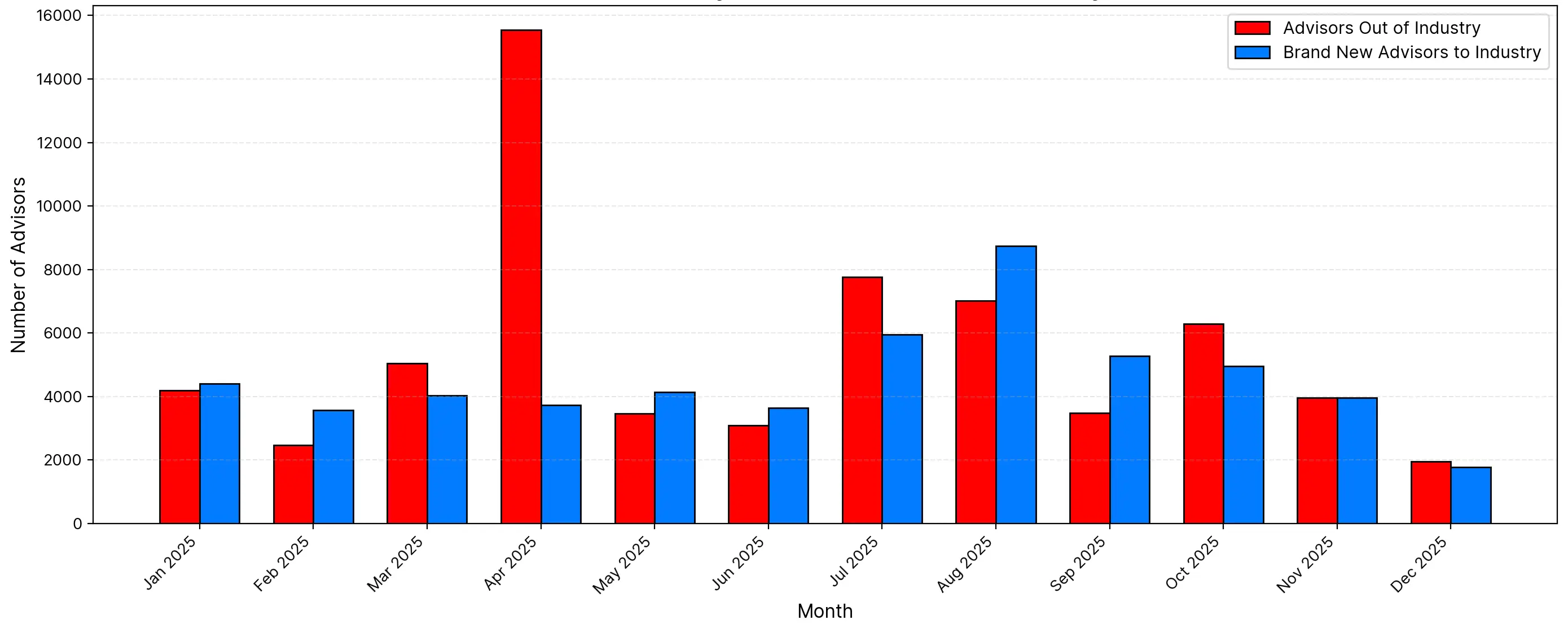
The RIA ecosystem experiences constant movement, with advisors shifting firms, changing roles, or entering and exiting the industry every month. Even in slower periods, thousands of individual records still change behind the scenes. This level of ongoing churn means any static prospect list begins losing accuracy almost immediately.
Brand New Advisors to the Industry
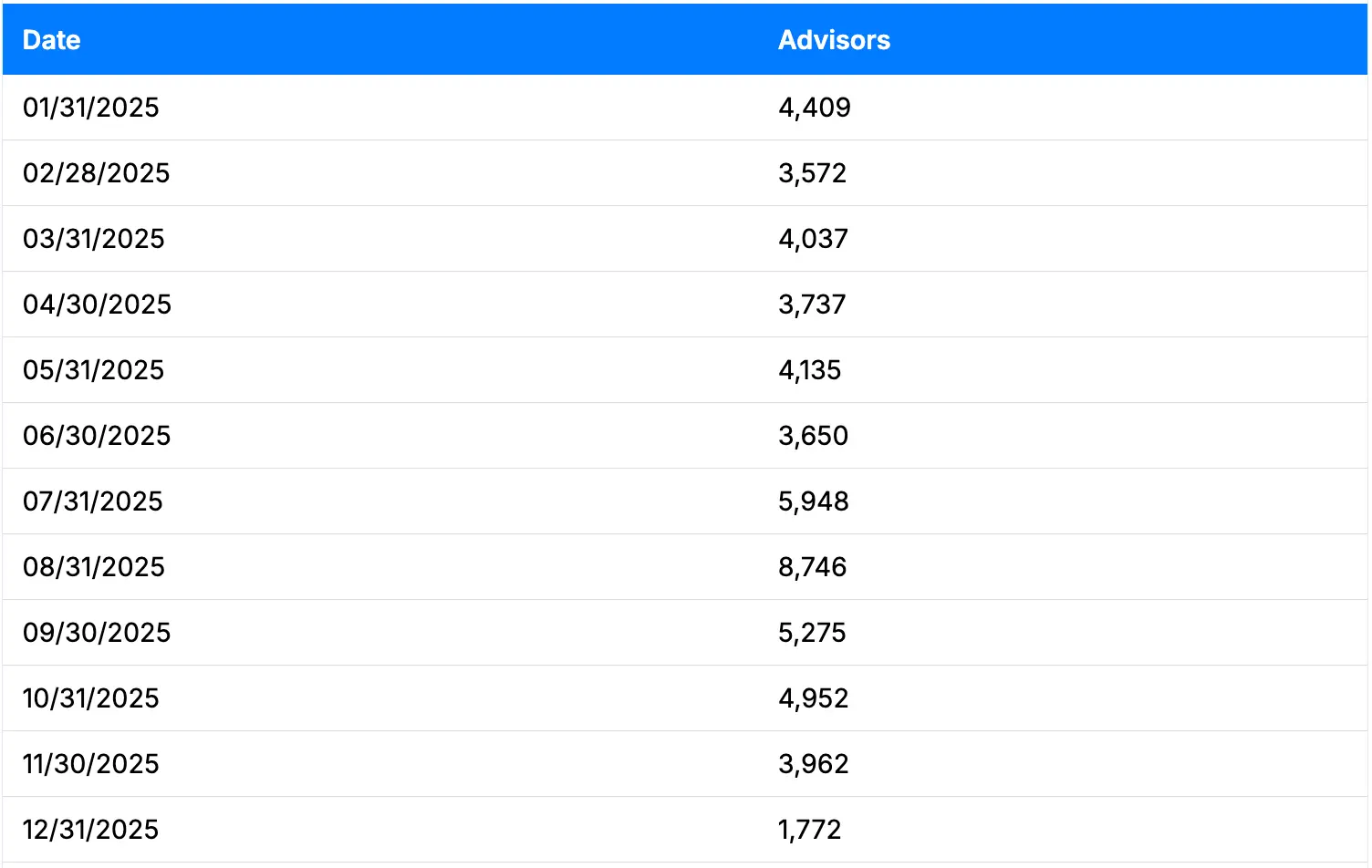
Advisors Who Left the Industry
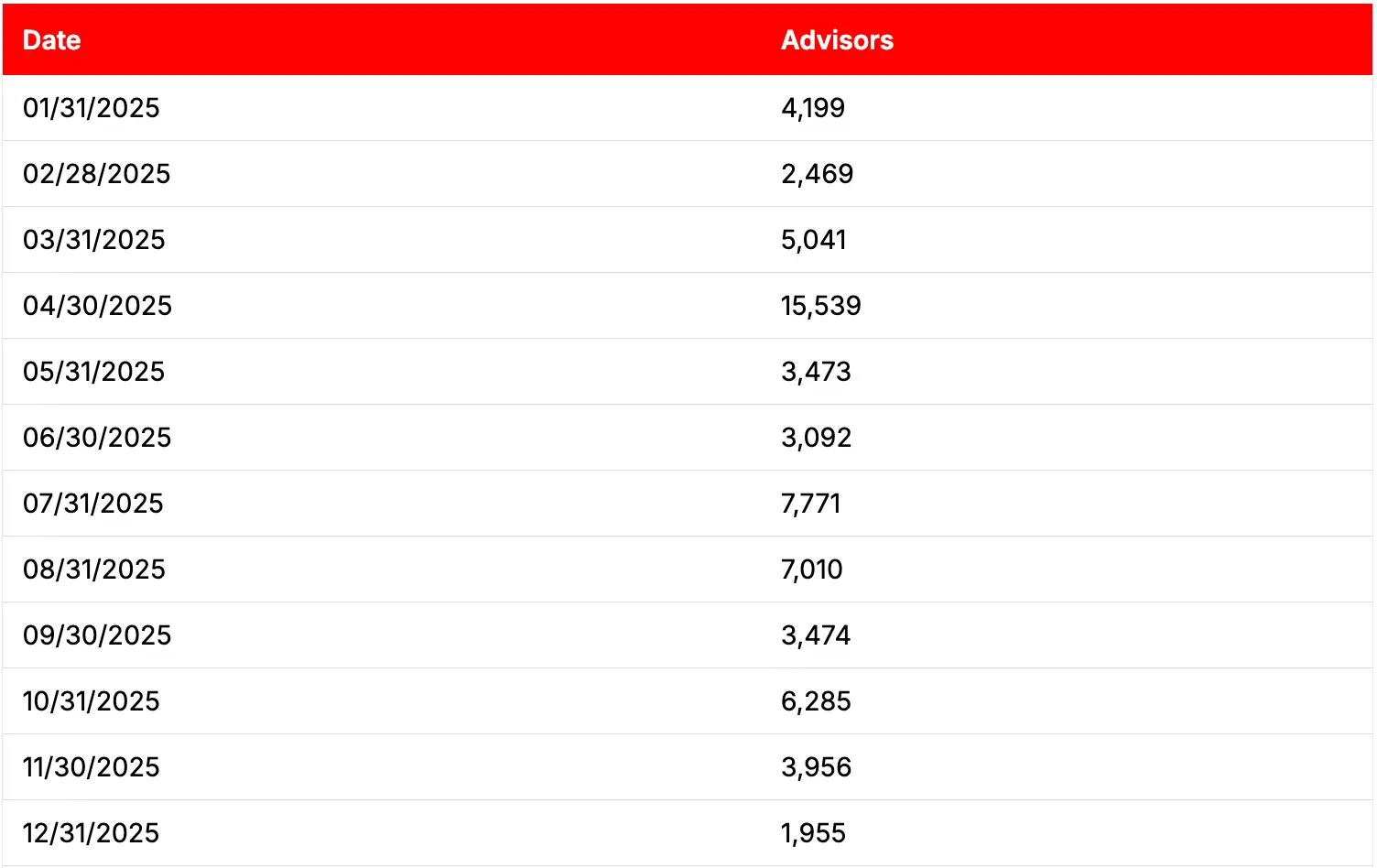
New Advisors vs Advisors Who Left
Advisors Who Moved
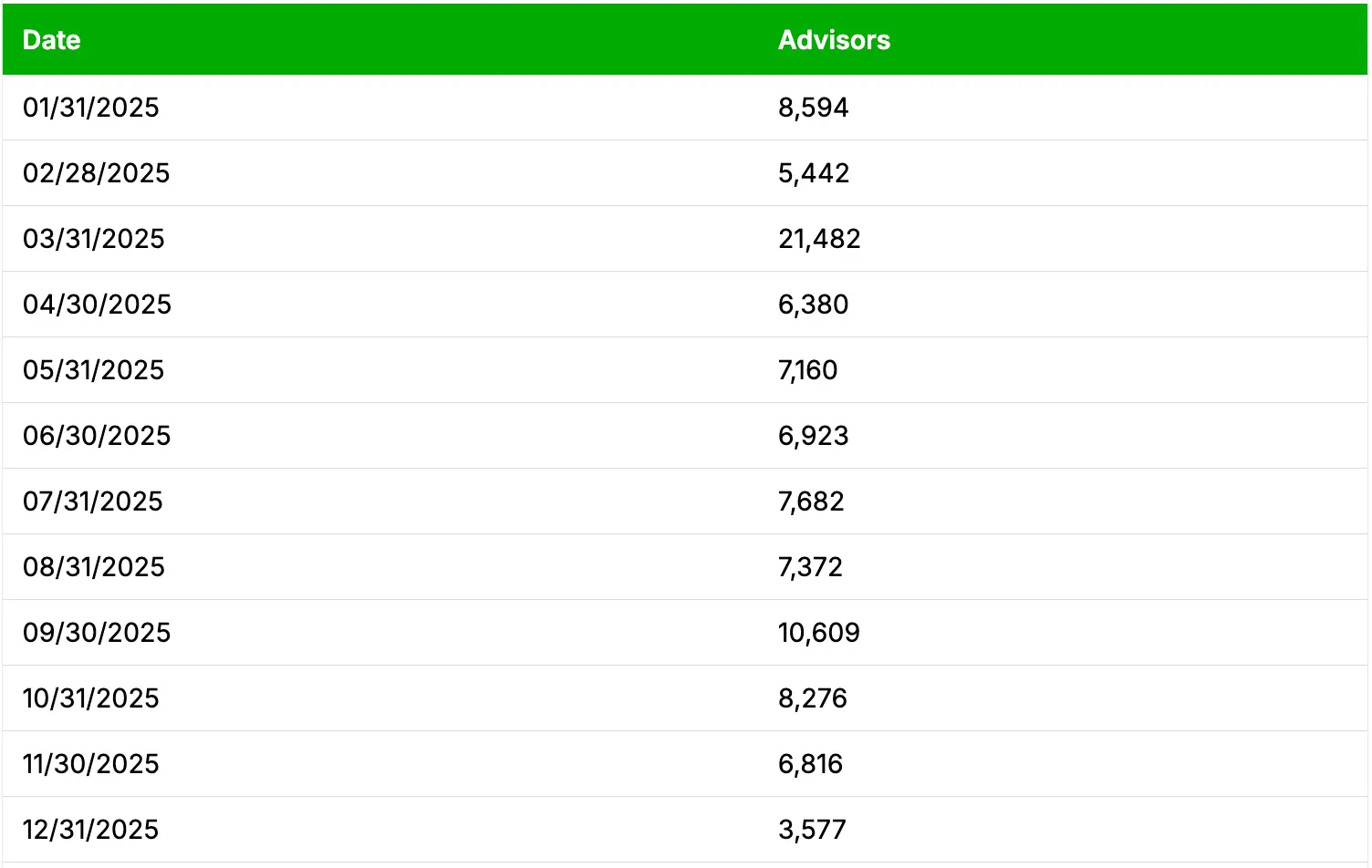
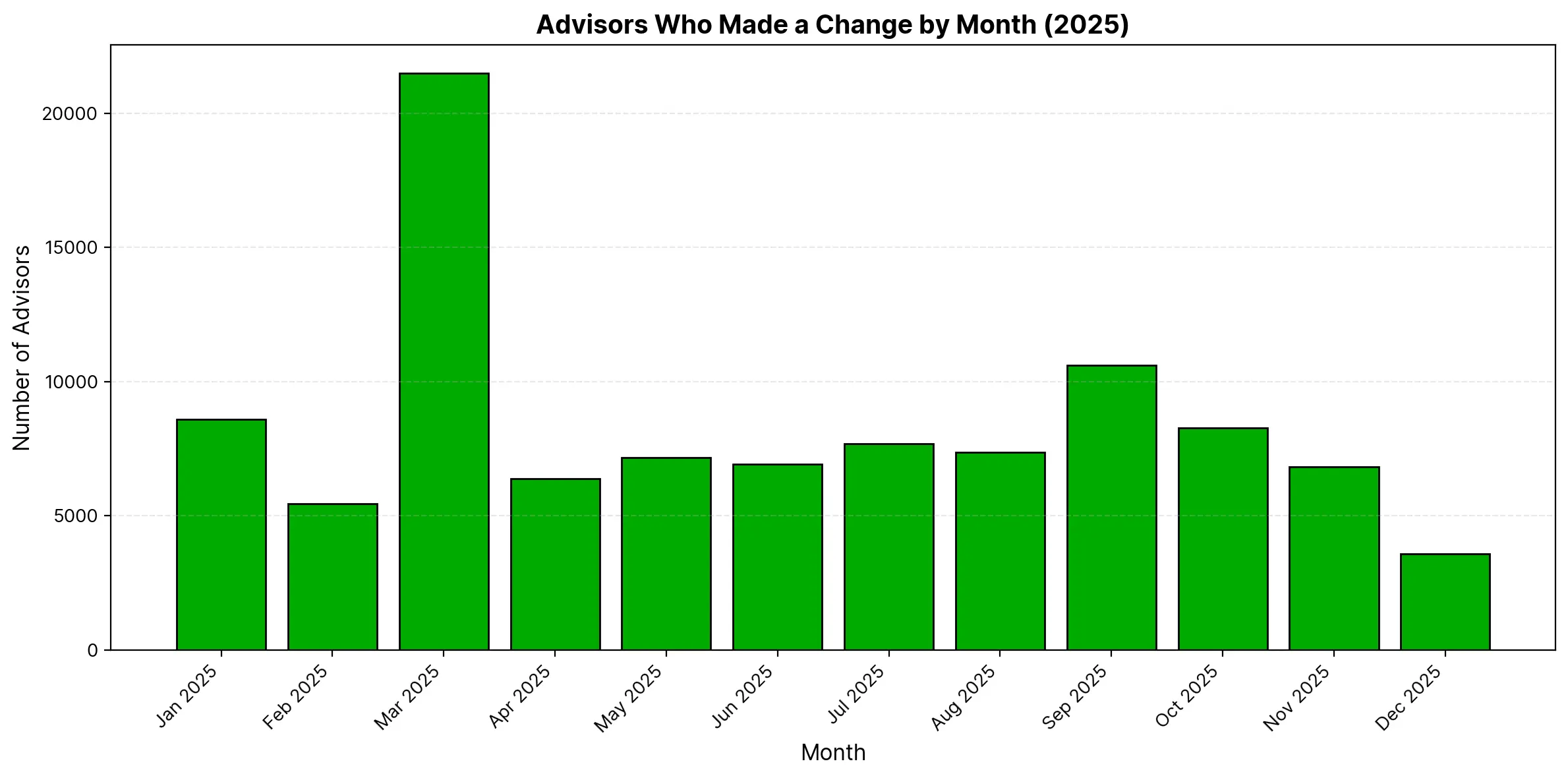
The data makes the scale of advisor movement impossible to ignore, with major spikes in March and September and meaningful activity recorded in every other month. Even the lowest month still shows several thousand changes. Advisor data never stays still, and accurate segmentation requires a system that updates as frequently as the industry itself.
Why a Live Database Delivers Higher ROI Than Any One-Time Refresh
Working from a static list is like trying to navigate a city using a map printed a couple of years ago. Streets change, buildings go up, routes shift and you end up off course without realizing it. A live database eliminates the guesswork by updating itself as soon as the market changes.
Teams that operate from continuously refreshed data experience sharper segmentation, cleaner territories, stronger engagement, and far less wasted time. They do not need to “reset” once a year because their data never falls behind.
Your competitors will continue exporting spreadsheets. You will operate from live intelligence.
If you want to see how continuously updated advisor data can transform your targeting, segmentation, and outreach, Start your free trial.

Cole Cummings is the Director of Marketing at AdvizorPro and a B2B SaaS marketer with multiple years of experience in the fintech industry. He leads all of AdvizorPro’s data-driven research and industry reports, giving him deep expertise in the RIA ecosystem and the trends shaping advisor behavior, allocation decisions, and firm growth across wealth management.
Related Post
Related insights you may find valuable