Are RIAs Pulling Back on Crypto?
.avif)
.avif)
.avif)
Q3 2025 - Q4 2025
Crypto exposure inside the RIA channel has evolved quickly over the past year, but the question remains: are advisors leaning in, or starting to pull back?
It is a timely question. The crypto market has taken a significant hit in recent months, with many coins down sharply from their peaks and broader sentiment turning cautious. When prices fall that hard, the natural instinct is to wonder whether institutional and advisory allocations are following suit. We looked at the numbers to find out.
Using data from the AdvizorPro platform, this analysis examines how registered investment advisers (RIAs) are allocating to listed crypto ETFs across two consecutive quarter-end snapshots. The focus is on adoption, concentration, entry and exit behavior, ETF selection, and allocation intensity.
The universe analyzed includes 25 crypto-related ETFs and trusts, spanning spot Bitcoin, Ethereum, thematic blockchain strategies, and select alt coin products.
By looking at firm-level holdings, platform usage, and allocation patterns, this analysis provides a clearer view into how advisors are actually implementing crypto within portfolios, not just whether they are using it.
Executive summary
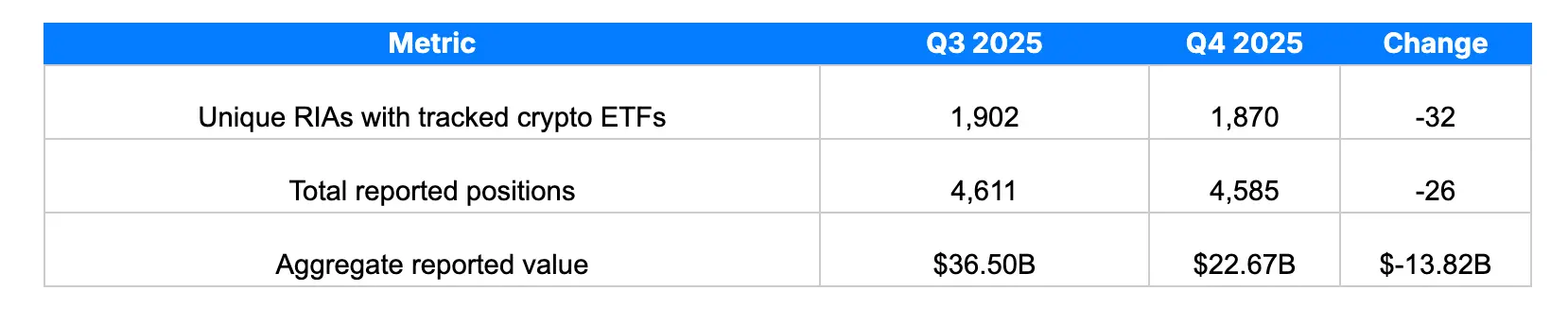
- Roughly stable adoption: Based on the selected ETFs analyzed 1,902 RIAs held at least one tracked crypto ETF in Q3 versus 1,870 in Q4.
- Bitcoin products dominated advisor adoption. In Q4, IBIT led with 1,321 firm holders, followed by GBTC (584) and FBTC (550).
- Churn was moderate rather than explosive: 235 RIAs initiated positions in Q4 while 267 RIAs that held in Q3 no longer appeared in Q4.
- Advisors generally preferred one primary wrapper. Nearly half of Q4 holders owned just one tracked crypto ETF.
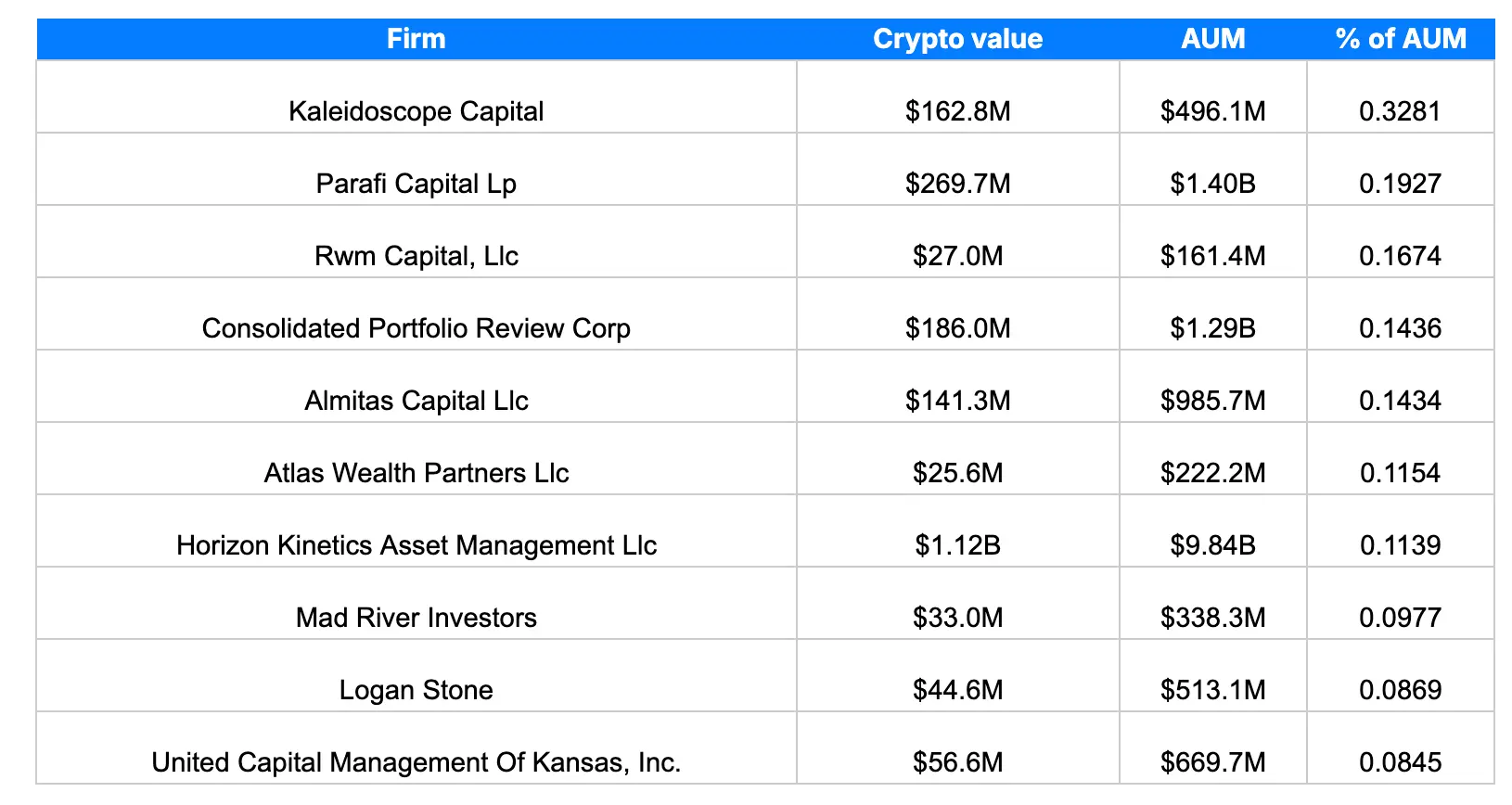
- Crypto still looked like a satellite allocation for most RIAs, but a subset of specialist firms ran much higher portfolio exposure.
This is a holdings-snapshot analysis, not a flows analysis. 13F-based data can understate or omit some positions, can include non-traditional RIA filers such as hedge fund managers, and reflects only the securities present in the uploaded files.
Market Overview
Top ETF Adoption by Firm Count
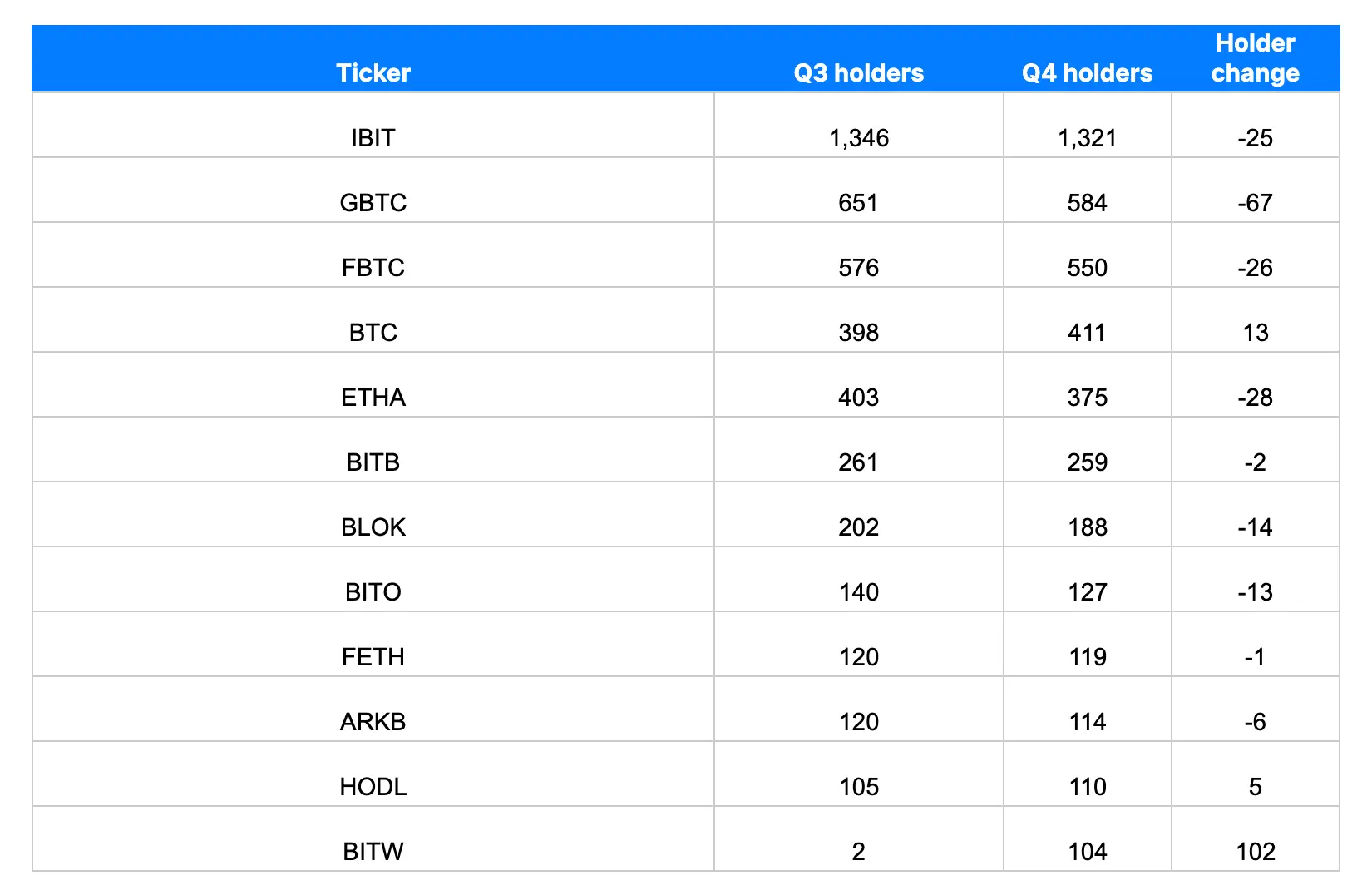
Pattern: the adoption leaderboard stayed highly concentrated in Bitcoin wrappers. IBIT maintained a commanding lead, while Ethereum products remained secondary.
Key Patterns and Interpretations
- IBIT remained the default institutional wrapper. Even with a small quarter-over-quarter decline in holder count, no other product approached its distribution footprint.
- GBTC continued to lose relative share. Its decline is consistent with a migration toward lower-fee or newer spot structures.
- Ethereum adoption was meaningful but still clearly below Bitcoin adoption. ETHA and FETH gained shelf presence, but Bitcoin remained the gateway asset.
- A few niche products showed growth from a low base, including BITW and BSOL.
- Thematic blockchain exposure through BLOK still appeared in the dataset, but at a much smaller scale than direct crypto wrappers.
Understanding these shifts requires continuous visibility into advisor activity, including holdings, platform relationships, and firm-level changes. This is a core part of how teams monitor the market using datasets like those featured in the US Wealth Advisor Movement Report.
Portfolio Construction Behavior
In Q4, 883 RIAs held exactly one tracked crypto ETF, 425 held two, and 562 held three or more. This suggests most RIAs selected a single preferred exposure vehicle rather than building broad crypto ETF sleeves.
Interpretation: for many advisers, crypto ETFs look like a model-portfolio sleeve or tactical satellite position, not a broad manager-selection exercise.
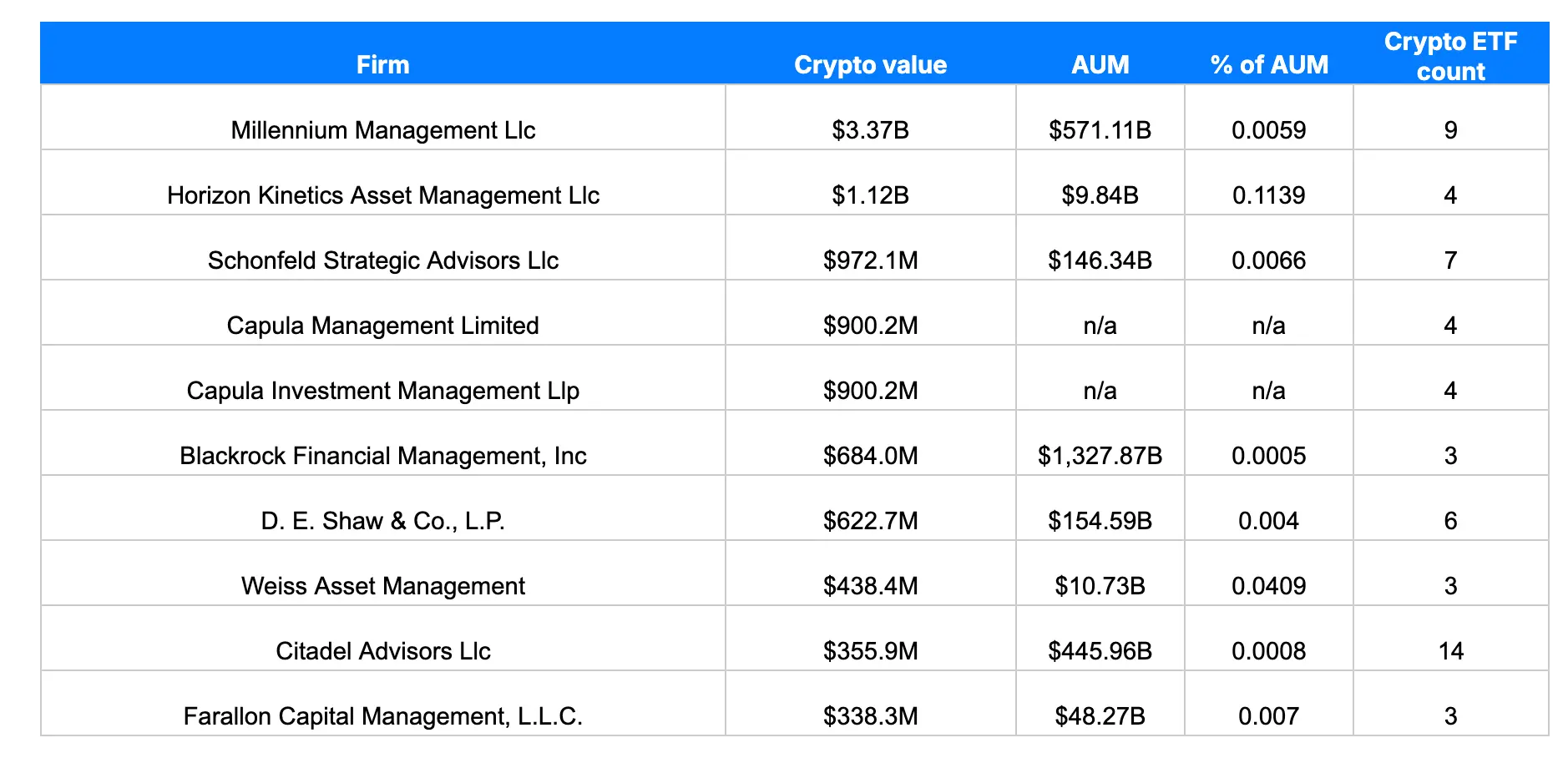
Largest Q4 Allocators by Dollar Value
Highest Q4 Crypto Allocation as a Share of AUM
Strategy Implications
- For asset managers, IBIT, FBTC, and GBTC remain the most relevant competitive set for advisor distribution analysis.
- For lead scoring (identifying which advisors are most worth prioritizing for outreach), a prior Bitcoin ETF holder is likely the strongest signal of near-term openness to adjacent digital-asset products. If a firm has already allocated Bitcoin, the internal and client-facing barriers to broader crypto adoption are likely much lower.
Looking Ahead
The data from Q3 to Q4 2025 tells a story of consolidation rather than retreat. RIA adoption of crypto ETFs held roughly steady, Bitcoin wrappers maintained their dominance, and most advisors continued to treat digital assets as a small satellite position rather than a core sleeve. The modest decline in aggregate reported value reflects market pricing, not a mass exodus of conviction.
For asset managers and distribution teams, the more important signal is behavioral: advisors are standardizing on one or two trusted wrappers, churn remains moderate, and a small but growing segment of specialist firms is running meaningfully concentrated exposure. That stratification, between the broad base of single-ETF holders and the high-conviction specialists, will likely define the next phase of growth in the channel.
Monitoring which firms move between those tiers, and what triggers those transitions, is where the real competitive intelligence lies. If you want to track RIA crypto adoption, identify high-conviction holders, and stay ahead of shifts in advisor behavior, start your free trial of AdvizorPro and see the data for yourself.

Cole Cummings is the Director of Marketing at AdvizorPro and a B2B SaaS marketer with multiple years of experience in the fintech industry. He leads all of AdvizorPro’s data-driven research and industry reports, giving him deep expertise in the RIA ecosystem and the trends shaping advisor behavior, allocation decisions, and firm growth across wealth management.
Related Post
Related insights you may find valuable